The Internet Is Loud. Real Life Is Winning Again.
6 Mins
|
March 5, 2026

The Internet Is Loud. Real Life Is Winning Again.
For the better part of the last decade, marketing lived almost entirely on the internet. Clicks, views, impressions, reach. Every year the numbers got bigger and the attention spans got smaller. And for a while, it worked.
But lately something interesting has been happening.
People are starting to leave the internet.
Not completely, of course. No one is deleting their phones and moving into the woods. But there is a growing feeling that the constant scroll has started to feel a little exhausting. Every notification, every video, every perfectly optimized feed. Another tiny dopamine hit.
Eventually your brain starts asking for a break. The same way your body eventually asks you to stop eating sour candy at 2am.
And increasingly, people are finding that break in real life.
The Quiet Return of Being Somewhere
Over the last few years, something simple has become surprisingly powerful again. Being somewhere.
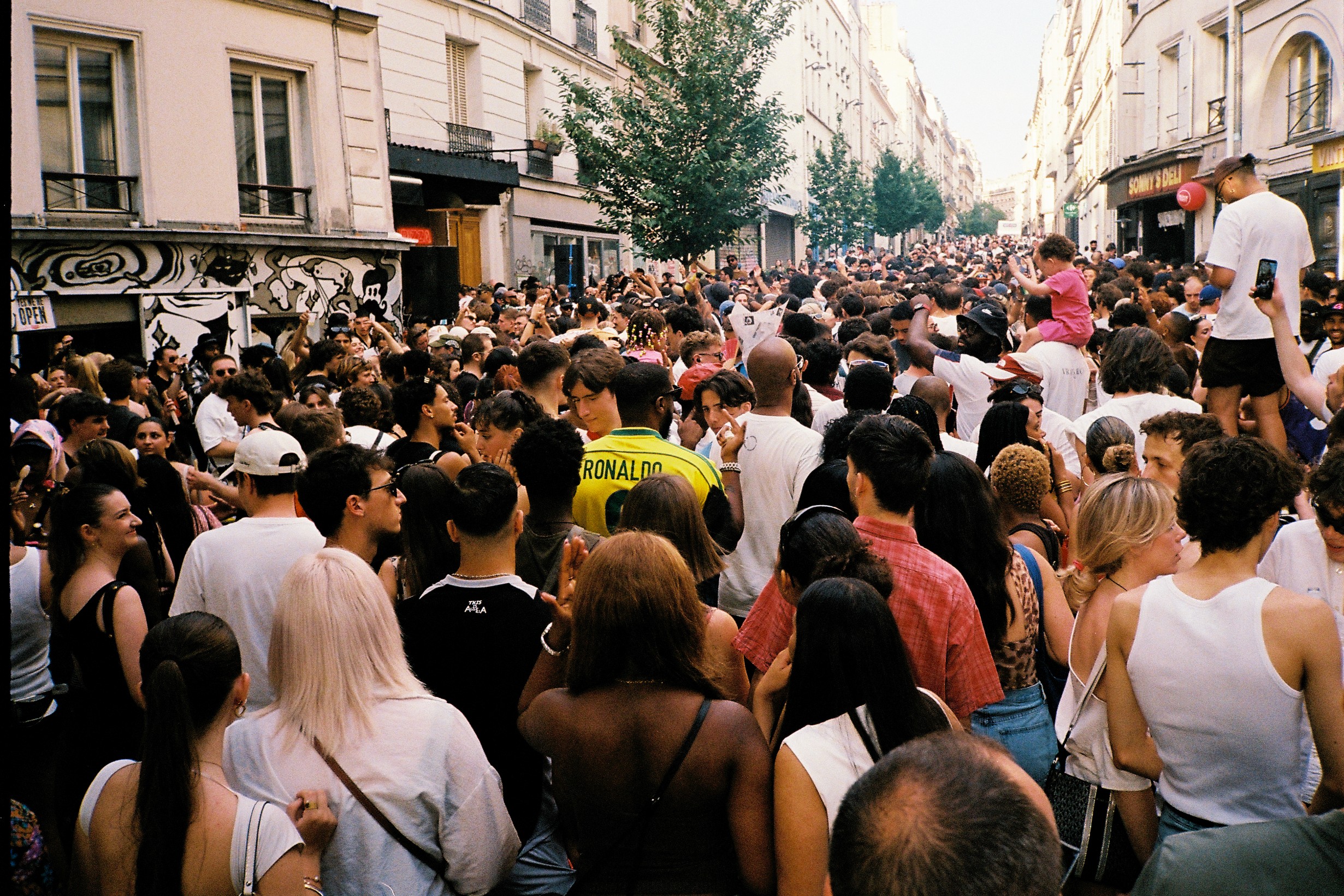
Festivals are selling out. Run clubs are turning into social scenes. Pop ups are drawing lines around the block. Small niche events are appearing in cities everywhere. Dinner series, art shows, warehouse parties, listening rooms.
People are looking for places where the algorithm is not in charge. Places where they are not staring at a glowing rectangle in their hand. Places where something actually happens.
For marketers, this shift matters. Because attention in the physical world behaves very differently than attention online.
Online attention is fleeting. It lasts seconds. Sometimes less. Real world attention is immersive.
When someone chooses to show up somewhere, they are already leaning in. No one waits in line for forty minutes in the rain for something they are half interested in. That kind of commitment is usually reserved for niche pop-ups, cult DJs, or whatever Bravo decided to air after a particularly chaotic episode of The Real Housewives of Salt Lake City.
Even Nightlife Is Trying to Put the Phones Away
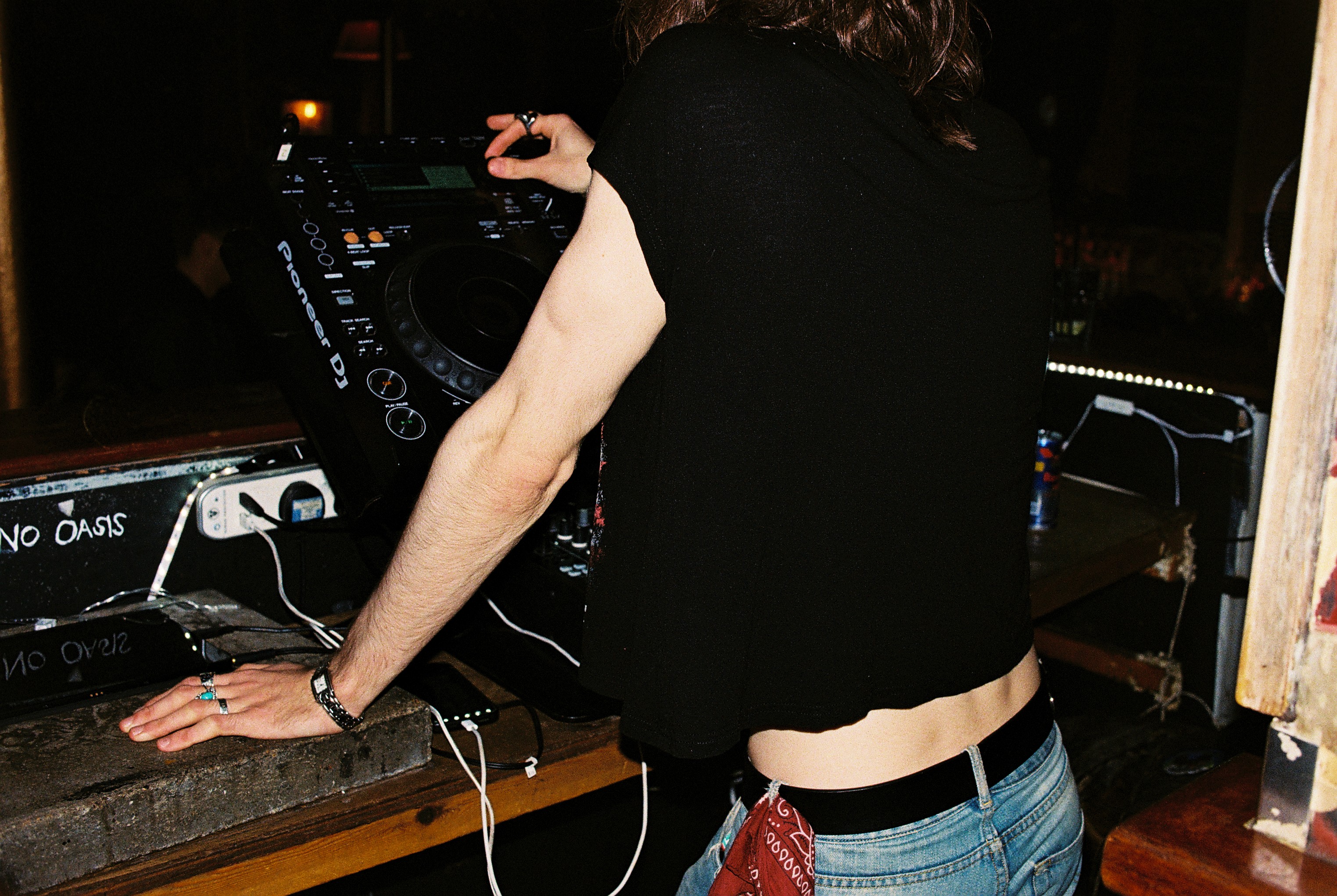
Nightlife is an interesting place to watch this shift.
For years, the dance floor slowly became another extension of the internet. Phones up. Flash on. Recording everything. Moments that used to exist only for the people in the room suddenly became content.
Lately, that has started to change.
More and more clubs and parties are experimenting with phone camera stickers. The idea is simple. Cover the camera. Leave the phone in your pocket. Be present.
Some places enforce it strictly. Some barely enforce it at all. Sometimes it works. Sometimes someone still finds a way to film a blurry twelve second video that will later appear on Instagram with the caption “vibes were insane.”
But the fact that the rule exists at all says something important.
People want spaces where they are not performing for the internet. They want to dance without wondering if they are going to appear in someone else’s story the next morning. They want moments that disappear.
And in a world where almost everything is documented, disappearing moments have become incredibly valuable.
Culture Still Happens in Rooms
The internet is incredible at distributing culture. But it rarely creates it.
Culture still tends to start the same way it always has. In rooms. Usually small ones at first.
Music scenes. Art collectives. Fashion communities. Queer nightlife. Food pop ups. DIY events. Group chats that slowly turn into gatherings.
These are the places where ideas collide. Where people experiment. Where something weird eventually becomes something cool.
The internet amplifies it later. But the spark almost always happens in person.
The brands that understand this are starting to rethink how they show up. Instead of simply posting about culture, they are stepping into the environments where culture is already happening. Not as billboards, but as participants.
The Best Marketing Today Feels Like Something You Found
Some of the most interesting brand work right now does not look like advertising at all.
It looks like a brand funding a music stage at a festival people already love. A pop up dinner with a chef who has a cult following. A small creative gathering that slowly turns into a community. A party that people talk about for weeks.
These moments do something digital ads struggle to do. They create stories.
Stories that people tell their friends. Stories that move through group chats. Stories that travel through the internet later, but started somewhere real.
Sometimes the energy of an event spreads the way a great Drag Race lip sync does. One person sees it, then another, and suddenly everyone is texting their friends saying, “girl… did you see that?”
That kind of momentum is very hard to manufacture in a marketing dashboard.
The Phone Will Always Be There
None of this means the internet is going away. It is still one of the most powerful distribution tools ever created.
But the balance is shifting.
People are becoming more intentional about where they spend their attention. They are looking for experiences that feel human. Moments where they can put the phone down for a few hours and remember what it feels like to be somewhere fully.
No blue light. Just music, conversation, movement, and the unpredictable magic of being in the same room as other people.
For marketers, that is a huge opportunity.
Because when you create something worth showing up to, you do not have to chase attention. People bring it with them.
And if you do it right, they will talk about it long after the night ends. Usually in a group chat the next morning, alongside someone asking if anyone remembers how they got home.

Common Froot
©2026
All Rights
Reserved

Contact us
Prefer a quick intro?
hello@commonfroot.ca